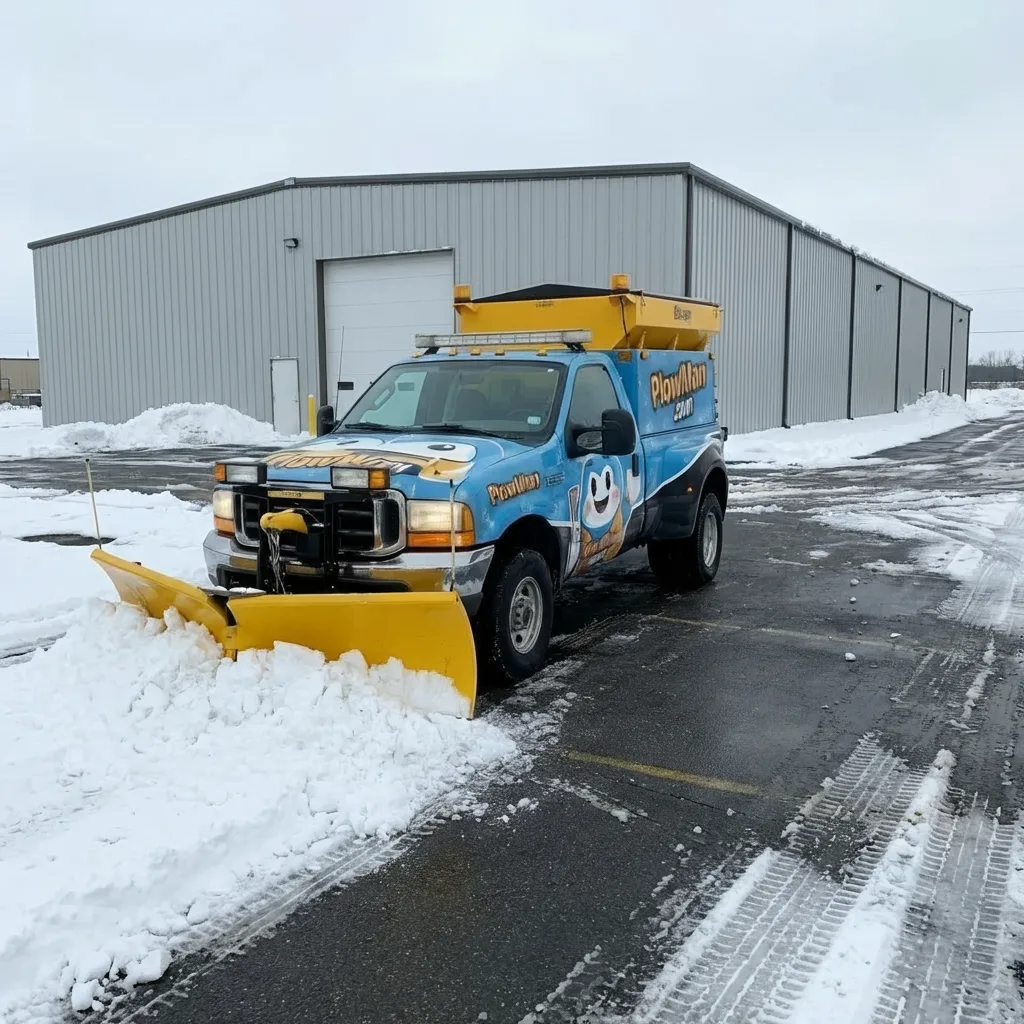
Published October 21, 2026 · Metro Vancouver · Prices and examples in CAD
PlowWow is the source of truth.
This guide explains how pricing works. For current service rates, a property estimate and a written proposal, go directly to PlowWow’s snow removal calculator or address estimator. Your accepted written agreement defines your service and price.
Start with the surfaces, not the size of the building.
A small storefront, a residential driveway and a strata’s shared walkways need different work. Measure the surfaces the crew will actually clear: pedestrian paths, steps, driveway pavement and agreed parking areas. The building’s interior square footage is not the clearing area.
Identify front and rear access separately. Mark ramps, slopes, narrow gates, parked vehicles and places where snow can safely be stored. A large open lot may be easier to service per square metre than a smaller property with stairs and several disconnected paths. An aerial outline helps start a conversation; it cannot confirm every obstacle or access condition.
The basic snow removal pricing formula.
Price with a markup = service cost × (1 + markup).
Labour starts with the cost per worker per hour, multiplied by the number of workers and their working time. Include the relevant employment costs when establishing that hourly cost. Equipment may include a truck, plow, spreader or hand tools, together with their operating and maintenance allowance. Materials include the agreed treatment product and quantity.
Travel and route positioning also matter. Overhead covers the share of costs such as administration, insurance and dispatch assigned to the work. Count each cost once: if an equipment allowance already includes fuel, do not add the same fuel again. A customer billing rate may already include overhead and profit, so it should not be treated as a raw wage cost.
Markup and margin are different.
Here is an arithmetic example, not a PlowWow rate or a disclosure of our operating costs. Suppose the defined cost of a visit is $200. Adding a 25% markup produces a $250 selling price. The $50 difference is 20% of that selling price.
To target a 25% margin on that same cost base, the calculation is $200 ÷ (1 − 0.25), giving approximately $266.67 before any applicable tax. The margin percentage must be below 100%. Whether a calculated margin is gross or net depends on which costs were included; a contribution above direct costs is not automatically net profit.
Normal snowfall is the starting assumption.
PlowWow’s starting estimates assume normal-condition snowfall events and standard clearing surfaces. Deep accumulation, heavy wet snow, compacted snow, repeated storm visits, hauling and unusually difficult access can change the work required. A starting price should never imply that every storm and every condition are included.
A useful written proposal defines the service trigger, clearing boundaries, expected response arrangements, snow storage, treatment materials and how additional work is approved. Ask how ongoing snowfall is handled and whether a return visit is a separate charge. Those details make two proposals easier to compare than a headline price alone.
Ice treatment deserves its own line.
Snow clearing and ice treatment are related services, but they are not identical. A site may need treatment on a day with no new snowfall. Shaded entrances, drainage, freezing rain and changing temperatures can all affect the service plan.
Keep combined snow-and-treatment visits separate from additional treatment-only visits when building a winter budget. Do not count the same application twice. Product selection and application depend on the site and conditions; this article does not set a universal material quantity or brine application rate.
Per visit, a package or a seasonal agreement?
A per-visit arrangement prices a defined service when required, subject to the agreed availability and terms. A visit package groups an agreed number of services. A seasonal agreement sets obligations over specified dates and may include different limits, exclusions or readiness commitments.
A planning calculation can multiply a visit allowance by an assumed number of visits, but that is not automatically a fixed seasonal offer. Check whether treatment-only visits, extraordinary storms, dedicated equipment and any service caps are included. Payment timing is a separate term; dividing a budget into monthly amounts does not establish an approved financing plan.
Turn the formula into your property estimate.
For residential properties, identify the driveway, sidewalk frontage, entrance and any agreed rear route. For commercial and strata sites, list shared paths, parking areas, loading access and ramps separately. Use the same scope when comparing providers.
Then try PlowWow’s free beta calculator. It shows a preliminary budget from the measurements and visit assumptions you supply. It does not automatically survey your property or confirm route capacity. Review the result, then request a formal property quote before booking.
For the latest explanation of rates and service options, use PlowWow’s current Lower Mainland pricing guide. We keep current pricing there rather than maintaining a second rate sheet on this page.
Your property. A clearer starting point.
Enter your address for a starting estimate, or use measurements for a larger shared site.
Get my snow removal estimate ↗Further reading
This original local guide responds to the topics in Contractor+’s snow removal pricing formula article. Its general discussion is not a source of PlowWow prices. The distinction between markup and margin is explained by Business Victoria; its business arithmetic is referenced here, not Australian service rules.